As a result, researchers are exploring ways to embed better logic into AI. The goal isn’t so much to make LLMs smarter; it’s ...
People use their bodies—not just their brains—to think. So the MIT Project on Embodied Education brings movement to the ...
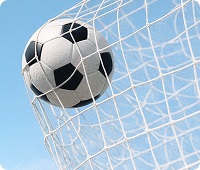
Artificial intelligence can beat world champions at chess, generate stunning artwork, and write code that would take humans days to complete. Yet when it comes to understanding why a ball falls down ...
Rose Yu has a plan for how to make AI better, faster and smarter — and it’s already yielding results. When she was 10 years old, Rose Yu got a birthday present that would change her life — and, ...
With just an iPad, students in any classroom across the world could soon reimagine the ordinary diagrams in any physics textbook—transforming these static images into 3D simulations that run, leap or ...
Two pioneers of artificial intelligence—John Hopfield and Geoffrey Hinton—won the Nobel Prize in physics Tuesday for helping create the building blocks of machine learning that is revolutionizing the ...
The original version of this story appeared in Quanta Magazine. Once upon a time, long ago, the world was encased in ice. That’s the tale told by sedimentary rock in the tropics, many geologists ...
When seawater gets cold, it gets viscous. This fact could explain how single-celled ocean creatures became multicellular when the planet was frozen during “Snowball Earth,” according to experiments.
One of the most exciting aspects of the current era of space exploration (Space Age 2.0) is how time-honored ideas are finally being realized. Some of the more well-known examples include retrievable ...
Some results have been hidden because they may be inaccessible to you
Show inaccessible results